
Summer of South Asian Ministry
In some ways this summer was my summer for significant South Asian ministry, and in many ways a summer of answered prayers for clarity in my role as a minister to South Asians.

I directed the 2014 Bangladesh GUP, and here are a few of my reflections: Being the director of this GUP after serving as a staff for the past two years was adramatic change. Suddenly, I was the one people looked to for answers; I was responsible for booking flights, determining program with our hosts and making sure our team raised all their funds. There were aspects that I loved and aspects that I hated.
LOVED
• Working with a new staff team and figuring out how to free them to lead with their strengths and grow in their weaknesses
• Renewing and deepening relationships with BSFB staff and students
• Relying on God in new ways and seeing the ways He would meet me and call me to trust and partner with Him
HATED
• Making tough decisions on behalf of the team and the ways that would affect relationships between the team and myself
• The all-consuming thoughts about the GUP and the loneliness of leadership
• Needing to always be thinking on my feet and making quick changes due to unforeseen variables
But, now as I look back on the experience, I am grateful for the things that our team learned and experienced, how well we partnered with BSFB, and the ways that I grew as a leader. You can read more of my Bangladesh GUP reflections here.
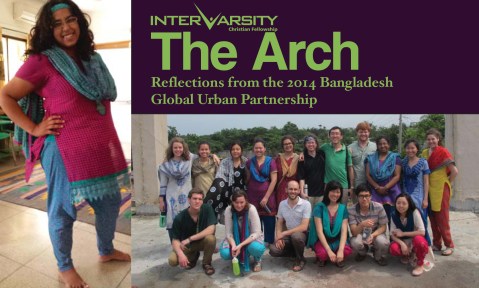
I also took two Ryerson students with me to the 3rd South Asian InterVarsity Leadership Institute hosted by InterVarsity USA in Boston this August.
To be honest, I was not looking forward to this conference. I believed this would be a deeply enriching experience for the students, but I was tired from the GUP and other summer responsibilities and was sacrificing being part of some significant events in Toronto that week. But, our God is a gracious God. In all the places of need I felt, He met me with abundance. I felt a deep richness of partnership with my colleagues, I was empowered to lead and refueled after a long season of fruitful but tiring work. And I was amazed at what happened for my students. S, a recent graduate, told
me this story on the bus ride home: “I’m a Pastor’s son and have been a Christian my entire life but I NEVER talk about my faith with people. Even when my friends were thinking about becoming a Christian, I wouldn’t talk to them until after they made a decision to follow Christ. I always found talking about my faith awkward. But when we were in Boston sharing our faith with strangers, I realized it’s always awkward when you start but you have to get over it. So I did, and it was amazing!”After S got home, he had started a new job, and within 20 minutes of meeting his
supervisor he shared his faith and asked him to follow Jesus! And N was so excited to reach out to South Asians on our campus. He felt inspired by the ways he can easily build relationships with nonbelieving South Asians and be a witness. Since returning to campus, we have had more South Asians be involved in our ministries than ever before! Praise God!

But I’m too young to be an “Elder”
In January and February of this year, I was invited to participate in conversations about multi-ethnicity and diversity within InterVarsity Canada. These meetings came as a response to meeting held in June of 2013, and were at the time leading up to and during a deep source of stress, anxiety and discomfort for me. The meetings were set up for visible ethnic minorities on staff with IVCF to have a space to share some of our experiences of cultural dissonance within the organization with members of the Campus Team. The Campus Team (a team of IVCF’s senior leadership) were to listen, and if necessary ask clarifying questions, but otherwise offer no response to things we said. This format added to the stress of the situation, and I left those meetings feeling unresolved and deeply saddened about where we were as an organization and about the experiences my colleagues bravely shared. I then had the misfortune of having to rehash these conversations numerous times for friends, colleagues and supervisors who were not in the meetings but wanted to hear about the experience. And though not intended what followed was 4 months of silence from the leaders and organizers of this June gathering. Then, we heard from the VP of Campus Ministry, who in her response apologized for the delay and named that in early 2014 there would be a gathering of “elders” who would be part of conversations about next steps. A few of my close friends and colleagues were named as some of those elders, and when I first saw this email, my heart sank. I was happy for my colleagues to be in these conversations but also was feeling unsettled that they wouldn’t be able to fully represent me or the voice of those who are minorities within the minorities and I would be in yet another place where it felt like my voice on a matter I care deeply about was being silenced.
But in December 2013, I got this email: During and after the gathering of visible ethnic minority staff in June, there has been opportunity to learn a lot as we seek to move forward and grow together in inter-cultural competence. Last Spring it became clear that among the broad staff team there are those who are recognized and serve as unofficial “elders” whom others seek out for interpretation and sponsorship. In January some of those people will get together to talk together about where we are and what are some next steps. Would you consider being a part of this conversation?
I said yes, and found myself in these “elder” meetings. As I sat in this room with other “elders” and members of the Campus Team, I was struck by the sense that “I’m too young to be an elder”. My heart grieved for the older South Asian Canadian staff that were once on staff but have since left. My heart grieved where we were as an organization. My heart grieved my experiences as a South Asian Canadian IV staff and the stark differences between my experiences and those of my South Asian USA IV staff colleagues.
But at the end of these meetings, we left with hope. We named some tangible next steps for future staff placement, changes in fundraising training, and suggestions for supervisor training. We also planned to meet with all those who gathered in June 2013, to debrief those meetings and offer encouragement. As “elders” we were asked to lead small groups discussions during this meeting.
At this debriefing meeting, which happened in late February, In addition to time debriefing we made a timeline of significant moments in IVCF Canada’s multi-ethnic and multi-cultural history. Seeing these milestones offered a lot of hope and perspective as we saw how things rapidly changed in the last few years. There’s still a long way to go, but there’s hope for the future for those who are on staff and for the students present in our ministries.
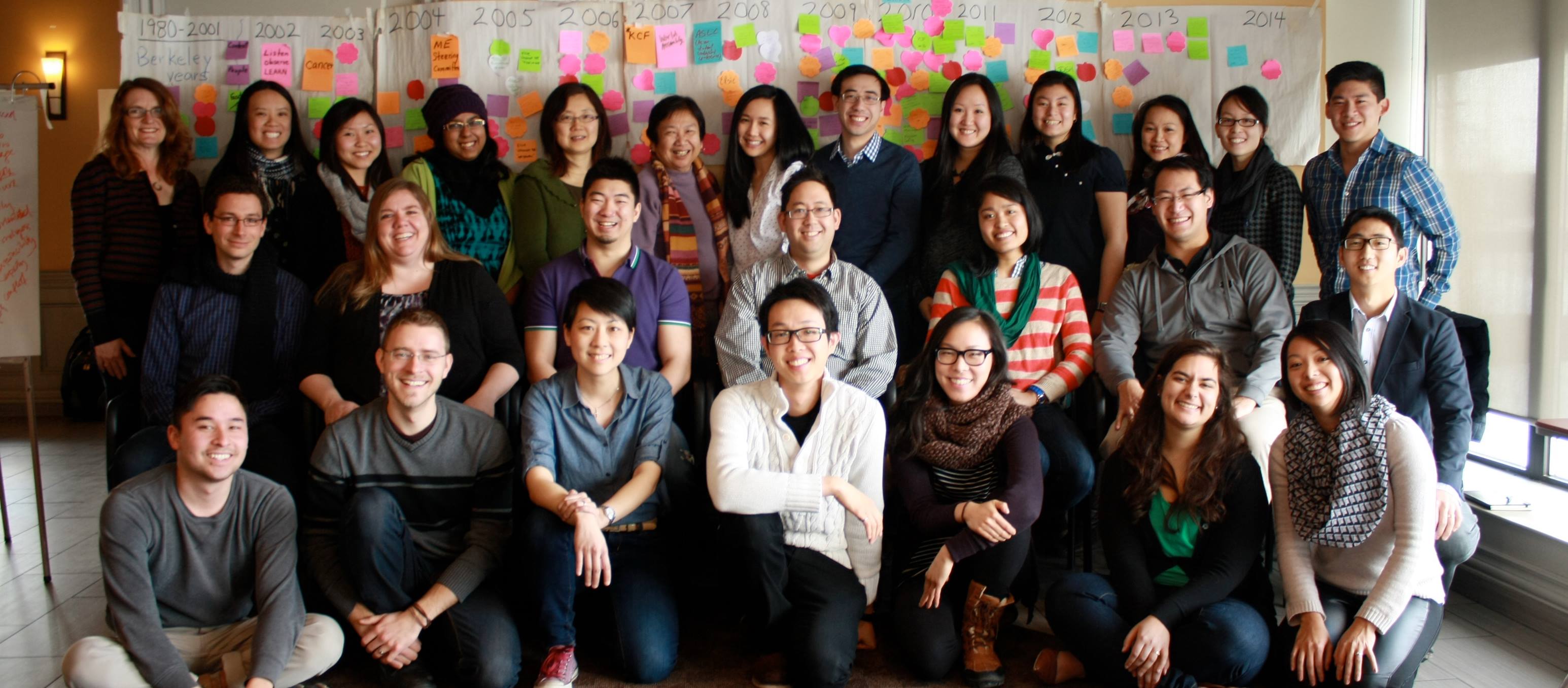
The Multi-Ethnic and Multicultural Gathering of IVCF Canada staff
Shaped by Acts

The Acts of the Apostles has been a primary text in shaping ministry at Ryerson, the Bangladesh GUP team and my regional staff team this year. I’ve sat in these familiar texts with students reading them for the first time, translated into Bangla with our sister organization, and using it to shape ministry in the GTA with my colleagues. And with each group of people, I’ve been impacted by the text in new ways. Acts 4 and the prayer for boldness, led GUP participants to boldly rely on God and try new things as they interacted with our Bengali brothers and sisters. During the winter semester, the Ryerson community was captivated by the Acts community, as they wrestled with what it meant to share all things in common and be a welcoming community that continues to have the Lord add to their number daily. While I was in Bangladesh, the Ryerson community continued to gather during the summer, and welcomed students from the OCAD community to study Paul’s missionary journeys. We found ourselves living in the text as we grew close as a community and prayed and sent each other into local and global mission fields. As a regional staff team we’ve spent this fall studying Acts 2 in-depth, and praying and seeking partnership with the Spirit on our campuses.
Loving Mark (the Gospel) and other musings
I have a confession to make: for YEARS (most of my time on staff with IV) I have HATED GREATLY DISLIKED the Gospel of Mark.
It’s been a subtle dislike at first, but one that would show up in unexpected places:
a) in all my years in ministry (3 as student and 6 as a staff), I have NEVER led a Mark study on campus.
b) I refused to attend MarkCentral until I was forced to for work, and it wasn’t until the 3rd year I went that I actually enjoyed it.
c) There is no Mark folder in my bible study folder (there’s one for all the other Gospels, Acts, Romans, and some other Paul texts).
d) Even when some of my awesome friends participated in theatre productions of the Gospel, I don’t have fond memories of going or inviting students to attend.
e) Recruiting for MarkCentral is one of the first tasks I will pass off to my students or staff partner.
f) One of the things that made me excited for going to Bangladesh the first 2 years I went was that I wouldn’t be available to teach at MarkCentral.
Thankfully, I serve a gracious God who, despite me, draws his children toward Him, even using this Gospel. BUT, as I embark on this year, which is my 11th anniversary at Ryerson (including my time as a student); I was the one who suggested we study Mark, not just for one semester, but two!
And as I sit in my second office, aka the Mt Pleasant and Soudan Ave Starbucks, prepping Scripture while listening to a soft music mix and sipping a Venti water; I realized how much I’m starting to love Mark. I’m excited for the students who will be joining us in studies this week and the weeks to come, and I’m excited to see how God will meet us (myself included) this year.
2013 Highlights
Here is this year’s annual report. Enjoy!

Scattering Seeds
He also said, “The kingdom of God is as if someone would scatter seed on the ground, and would sleep and rise night and day, and the seed would sprout and grow, he does not know how. The earth produces of itself, first the stalk, then the head, then the full grain in the head. But when the grain is ripe, at once he goes in with his sickle, because the harvest has come.” Mark 4:26-29
Early in November, the Toronto regional Undergraduate Student Ministry, International Student Ministry, and High School Ministry Staff got together for a time of fellowship and training. We started this time studying the above passage of scripture and spent some time reflecting on where are the places we have faithfully scattered seeds in our ministries. We focused more on the places where we have been faithfully scattering as opposed to paying too much attention to whether or not things have grown. As my staff partner and I reflected on how we were scattering and wanted to celebrate the following:
Tube Duels
A google search of “obscure sports” brought up the discovery of cardboard tube duels, where people duel in homemade cardboard armour with cardboard paper tubes! My staff partner, leadership team and I thought that this was a ridiculous idea, but one that could be a lot of fun to attempt as a new student outreach event, so we did. It was a lot of fun, brought in a bunch of new and old faces, and we had reporters from one of the campus newspapers come and participate and do an article about it! We began the event by putting people into teams and asking them to create armour that represented their team (there were 4: ninjas, robots, pirates, and knights). Then the dueling began! After a number of individual and team wounds, we announced a winner who won a cardboard replica of Thor’s hammer. After a quick clean up, we invited everyone over for burgers at the McGill house, where we had a pinata strung up across our driveway. 80% of the people who came to the duel came back to the house, and a few signed up to come to our fall retreat!
Fall Retreat
For the first time in 4 years we had a fall retreat (which happened outside of the city)! We took the students to a retreat centre at Jackson’s Point, and had a great time studying Scripture, growing in friendship, worshipping by the campfire and enjoying the outdoors! We had a good mix of new and existing group members and felt very blessed and refreshed by our time together!
Teaching Workshops
Responding to a need for more teaching and training, Lauren, a student leader who is in her last year on campus, and I developed some workshops to equip students with tools to grow in their leadership and spiritual development. These workshops include scripture study, an interactive art piece, prayer and a time to learn and share from experiences. We led 3 this term on invitation, being a welcoming community and how to discern calling and listen to God’s voice. We’ve been amazed as we have seen students come from different clubs on campus and different campuses to receive and be blessed by these workshops!
Vision Fulfilled
By the end of September, I was ready to dub this semester, “the best fall ever”, and now at the end of November, I can claim that title with more fervor!
What’s been different about this year than other years? That’s the question I’ve been trying to answer. A lot of it has to do with the mysterious workings of God and his timing. And during the fall reading week, in mid-October, it hit me, God had been answering prayers I (and some of my student leaders) had been praying for years now.
Here’s a few:
- In 2009, God put ministry to South Asians on my heart, and gave me vision for the ways he had uniquely made me for this ministry. In the years that followed I have seen places and circumstances where I’ve come closer and gone farther from fulfilling this vision. I’ve been in seasons where I’ve felt blessed by the larger organization to advocate for and pursue this ministry and seasons where I’ve felt my voice and opportunities limited. And in the midst of my place in the larger whole, I’ve continuously prayed for God to bring South Asians to be part of the ministry at Ryerson. I’ve seen some students come and go, but this semester brought 2 male South Asians who continue to blow me away with their commitment and willingness to step up in leadership and responsibility! Both have expressed interest in leading manuscript studies, both are actively applying the Scripture in their lives, both are sacrificially making choices to be part of our community despite the long hours of commute and the challenges of balancing time with our community and schoolwork (both are engineering students). In addition to these two, we have seen a number of South Asians come and be part of some of our New Student Outreach events, and on campus our office is situated near the South Asian Alliance and the Bangladeshi Students Association which has led to some great conversations and possibilities of hosting events together!
- At Urbana 2006, a speaker challenged the crowd to pursue ministry by taking stock of activities and hobbies that you love to do and inviting non-Christians to do them with you and find ways to naturally talk about your faith while doing these things. This challenge has been at the heart of many of the ideas that formed our new student outreach events and specialized small groups. In 2011, Lauren, a student leader studying Nutrition, and I began a Cooking Ministry. One that she could widely invite her Nutrition classmates to and help bridge that community with her faith community on campus. In December of that year, we debriefed the semester and talked about how we longed for better partnership with the Christian students who attended that they would bring their friends and not force their faith on the non-Christians who attended but be able to share in natural ways that could provoke curiosity and opportunities for deeper conversations later. We would cast vision for Christian students to partner with us, and model what we were hoping for and had what seemed like endless group and individual conversations about inviting friends to be part of the ministry and the purpose for our gathering together. In the 3 years since this ministry began we have seen a steady stream of Christians and non-Christians gather, we have had a non-Christian step up and co-lead the ministry with us, and we have had the Nutrition Course Union and the Campus Community Garden advertise our group and pursue partnership with us (and have been blessed to watch a representative of the course union become a believer through seeds planted in this ministry)! This semester, we had 16 students gather for our cooking ministry (the largest gathering we’ve had), and we found out that even though our usual door for wide invitation had been temporarily closed, we had our biggest turnout because all of the Christian students who had been attending since the beginning each brought 2 friends! Praise God!
- As I mentioned in a few posts already Scripture has taken root in students lives in ways that we haven’t regularly seen, in addition to this happening we have seen deep community grow as people study scripture together. Last year, in one of the manuscript studies I attended, the leaders longed for our study group to close to one another through studying the Word and have that inspire spending time together outside of the study. They would often suggest fun activities to do outside of the study that were often met with lukewarm receptions at best. However this year, we’ve seen students choose to spend time having a meal together, commuting home together and even pursue housing close to one another!
- As I’ve seen our ministry on campus grow, I noticed that many of our key student leaders were women, and there was not as much ethnic diversity in our ministries as one would expect given the demographics of our larger campus community. As I continued to observe “who was in the room”, and asked who was not, I realized we had a surprising lack of diversity in programs of study represented. So I (and others) prayed for more diversity. This year we have seen a large diversity in students from various ethnic backgrounds, religious experiences, and programs of study. We have also seen a growing number of male students deeply commit themselves to our community and step up when leadership opportunities arise!
- For the past couple years, we have spent time developing ministries that help meet students where they are in their journeys. We have some ministries that focus on helping people trust and develop relationships with Christians (perhaps for the first time ever or the first time after having a large trust-breaking experience). We also have some that meet students who are seeking to learn more about Christianity. And we have a few that minister to Christians who have grown up in the church or have been following Jesus for a significant portion of their lives and long to grow deeper in their understanding or in how they express their faith. And we have a few ministries that help student leaders grow in their leadership. Of all the above listed, it was often the leadership ministries that were sparsely attended. It was not for lack of content, and it left my staff partner and I baffled. So we prayed and we opened up our leadership training ministries to anyone who would be interested in growing in leadership and we have seen a huge number of students choose in! Some we wouldn’t have guessed, and we have seen what was once a small ministry grow to influence students from various communities on Ryerson’s campus, as well as students at George Brown and OCAD!
Salted cookies, secret giving and sowing seeds
…are just some of the fruits of this fall’s Manuscript study.
We have spent this fall studying Matthew 5-7, the Sermon on the Mount, and this year we (my staff partner and our student Ieadership team) hoped to see students more actively living out the application of the Scripture.
So we thought through how we could apply the Scripture with a combination of thought provoking questions, simple illustrative activities, and tangible take-home challenges. Here’s a quick summary:
week one: We wrote out the Beatitudes in our own words.
week two: During our study we invited students to have a piece of gum that lost its flavour quickly. Then we gave the students a salted chocolate cookie which they ate and found delicious, after which we gave them a second cookie to give away (and left it open to see how they would go about doing that).
week three: We gave each person a plastic plate and invited them to write with a marker a word or phrase to represent something they needed to release to God. Then had them dip their plate in a bowl of water and as it washed away see it as a symbol of God’s forgiveness.
week four: We discussed what it would look like if we actually followed through with the words that we say and the good intentions that we have.
week five: We engaged in a prayer mapping activity to help us love our enemies and pray for those who persecute us.
week six: We encouraged students to “give in secret” by choosing to give and serve sacrificially.
week seven: Using the Lord’s Prayer, as a model, we spent some time interceding for each other and the campus.
week eight: We sent the students out to try a new prayer practice to help release anxiety.
week nine: After studying about not judging others, we spent some time reflecting on places where we have been too judgmental and working through the next steps toward repentance and where possible making restitution.
week nine: Through a different prayer mapping activity, we invited students to map out an answered prayer, making note of whether or not God answered in the ways we expected. Then we invited them to ASK God for something big, holding it open-handed to the ways God may answer it or in the timing He takes to do so.
week ten: After spending some time reviewing all the ways God has spoken to us through this sermon, we sent the students out with a packet of herb seeds so that they could grow in their understanding of how things grow (and better understand Jesus’ use of growing imagery) and also bless others with the herbs they grow, so that the impact of our study group goes beyond those participating in the study.
There are so many stories to share about how God has been working in the lives of these students who have gathered to study scripture with us, but here are just a handful:
• a student who is brand new to our community chose to: share the gospel for the first time to a stranger on the GO train (after giving that person a cookie), give his time sacrificially to serve his church, invite his friends to come to bible study, learn how to lead a manuscript study and co-led a study with me, and be actively involved in our community even though he has a long commute home!
• In fact, I found out in week seven, that half of the students who regularly attended our tuesday study chose to stay on campus for the study even though their classes ended hours earlier and they would then commute home to Pickering, Brampton, Scarborough, Markham or Mimico after the study during rush hour!
• Two students would come downtown just for the study (from Mimico and Markham) on days they didn’t need to come downtown for class! One of these students told me, ‘well, I would come downtown for a two-hour class, so I’m willing to come downtown for this’.
• And there have been so many encouraging stories of how the students have been actively choosing to love and serve their friends, family, roommates, and classmates in sacrificial ways coming out of choosing to apply this Scripture! Praise God!
More than friends with manuscript study
I have a confession to make: I hate manuscript study.
Or at least I used to.
When I was a student and my staff worker led me in one method of an inductive style Bible study called manuscript study, I was confused, at best. The next few times, I grew to loathe it, especially after a long day of lectures. I wouldn’t say much to contribute to the discussion during the study and I rarely left feeling like I had gained anything of value. And when I would meet with my staff worker, I would tell her all the reasons why I hated this method, and she would patiently listen and try and cast vision for why it could become a method I could grow to love…
Now, with a lead up like that, you probably are expecting me to share a story about how my eyes were opened and I began to see the value of manuscript study and deeply come to love it. After 3 years of studying scripture in this way as a student, a mission trip with the purpose of teaching local students of one of our sister movements how to do manuscript study, an internship with Intervarsity, and 3 years as a staff worker; I still didn’t love manuscript study.
To be clear, at this point, I liked manuscript study; if I tried to equate my relationship with manuscript study to a romantic relationship I would say that I liked it as a friend, I saw its value and would appreciate its company but would always be on the lookout for a style that was a better fit for me.
But what did that mean for ministry with students? Where my staff worker had a host of students who disliked manuscript study, I found myself with the opposite situation where I had a community of students gathered who LOVED manuscript study. So I would spend my time equipping students how to lead a manuscript studies so I could free myself up to pursue other creative ministries.
Last year, I found manuscript studies particularly draining. And after some time reflecting, I realized it was because we had let this method become routine and predictable. We would spend hours engaging the text intellectually, but not allow the truth of the text penetrate our hearts and we would rarely find ourselves applying the scripture beyond our study time. And I realized that we couldn’t keep on going this way, and actually there was room for some of those creative ministries to be included in our bible studies.
So we pursued manuscript studies in a new way this year, and in addition to amazing stories of God speaking new truths to students and students choosing to actively apply the Scripture in their lives; through the fusing of God’s word lived out creatively, it happened: I became more than friends with manuscript study.
Finding Home
“Fi, you HAVE to buy it, if you don’t I will not be friends with you…” At the end of our first week in country, Fi and I went on the first of many local adventures in Dhaka. We picked up some tailoring, got some local snacks and went shopping. The early rainy season made the weather unusually cool, a contrast to the “walking in butter” sensation that happened often last year. We stopped in one shop and Fi found an awesome shalwar khameez that was in a plaid pattern that was red, green and yellow, both the kind of outfit I could easily see Fi wear, and one that would bring delight to all who saw her in it, hence my strong admonishment to buy it. Reflecting on this day and our adventure, I realized I knew Fi a lot better than I did on last year’s GUP, and I had a strong sense of peace about being in and engaging in Dhaka; the fear that constantly gripped me last year was gone, I had a better sense of what to expect and could better anticipate situations. When we walked back to Grace House and told the students of our successful adventure, joy abounded in my heart, and I knew, I was home.
When we lead students on GUPs, we teach them about 4 stages of culture shock they will encounter as they adjust to a foreign culture: Honeymoon, Hostility, Humour, and Home. Honeymoon is the first, and occurs in the first few days or week in country, where everything is novel and new and there is a surface level love of all people and situations. As in life, the honeymoon ends and the next stage begins, which is hostility. In the hostility stage, there is recognition of experiencing culture shock, often people feel angry, frustrated, saddened, confused and a plethora of other emotions as they encounter things that once brought them so much joy. The length of this stage varies, some people spend a long time here, while others move into the next stage quickly. The next stage is humour, where things that once would bring up feelings of hostility are actually humourous. This is a difficult stage to gauge, as sometimes people rush to get here and try to find humour in situations that ends up being condemning or criticizing of the host culture (which would indicate one was still firmly in the hostility stage). The true humour stage is when there isn’t a mean spirit within the humour, and more a spirit of acceptance and joy. The last stage is home, where you feel as though the host culture is home. You’re able to see the good and the bad, and with right perspective know how to adapt appropriately to the situations at hand. The thing to note is that often people don’t always move through these stages in a linear way, and may jump back and forth through the stages as different situations arise.
Last year in Bangladesh, I loved the experience I had with the Canadian team. But I personally had a really hard time in Bangladesh. My expectations of how I would be received and perceived were far from the reality of my experience. I spent a few days in the honeymoon stage, and a few weeks in hostility stage, and only toward the end of the trip did I enter into the humour stage. But, I very much left the country never reaching the home stage. I walked away from the GUP last year thinking I would never step foot in the country again, and made efforts to be at peace with my experience. I never would have thought I would go back the following year, let alone direct the next year (more on that story later). I decided to go back once I realized how much this GUP influenced and pushed my students into new places of growth and discipleship, and also with the hope that God wouldn’t leave me unsettled with my experience in Bangladesh and would offer healing and redemption. I just didn’t expect it to happen so soon.
 The Arch